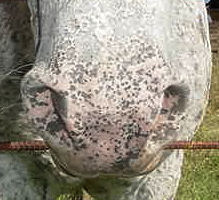
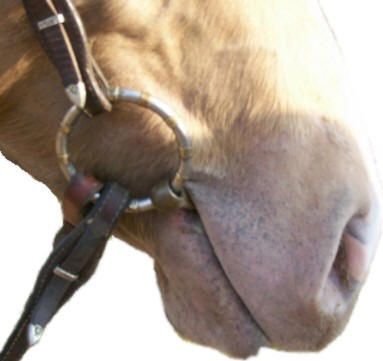
 Identifying the Identifying the
Champagne-Colored
Horse
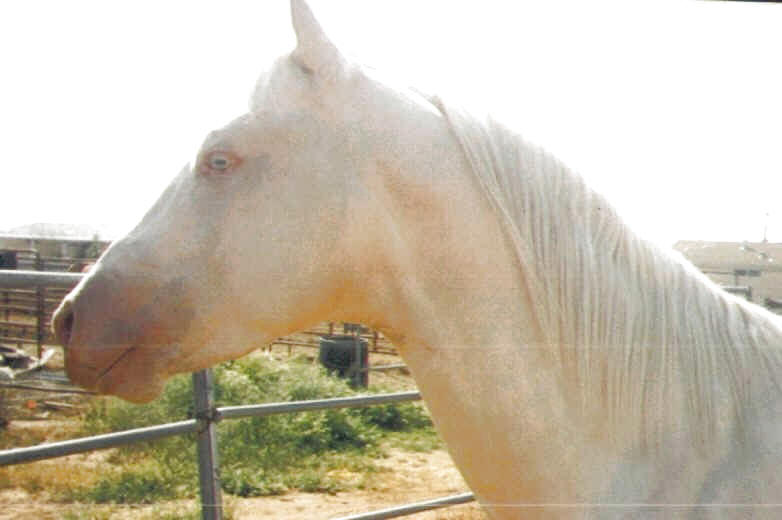
The adult
has pink skin
with abundant dark freckles
Champagne is a color-modifying gene, like
bay or dun,
and not a term for all shiny, light or strangely-colored horses.
Also, see THIS ARTICLE,
which includes this fact:
since the champagne gene has been determined to
be a North American mutation, which occurred sometime in the mid 1800's,
an equine must have at
least one ancestor (parent, great-grandparent, etc.)
of North American
bloodlines to be recognized as champagne.
Champagne vs. non-Champagne
characteristics
Memorizing this one
sentence will save a lot of
time:
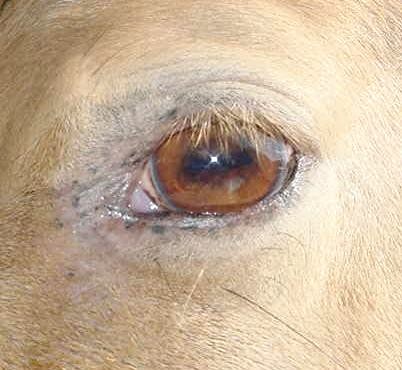
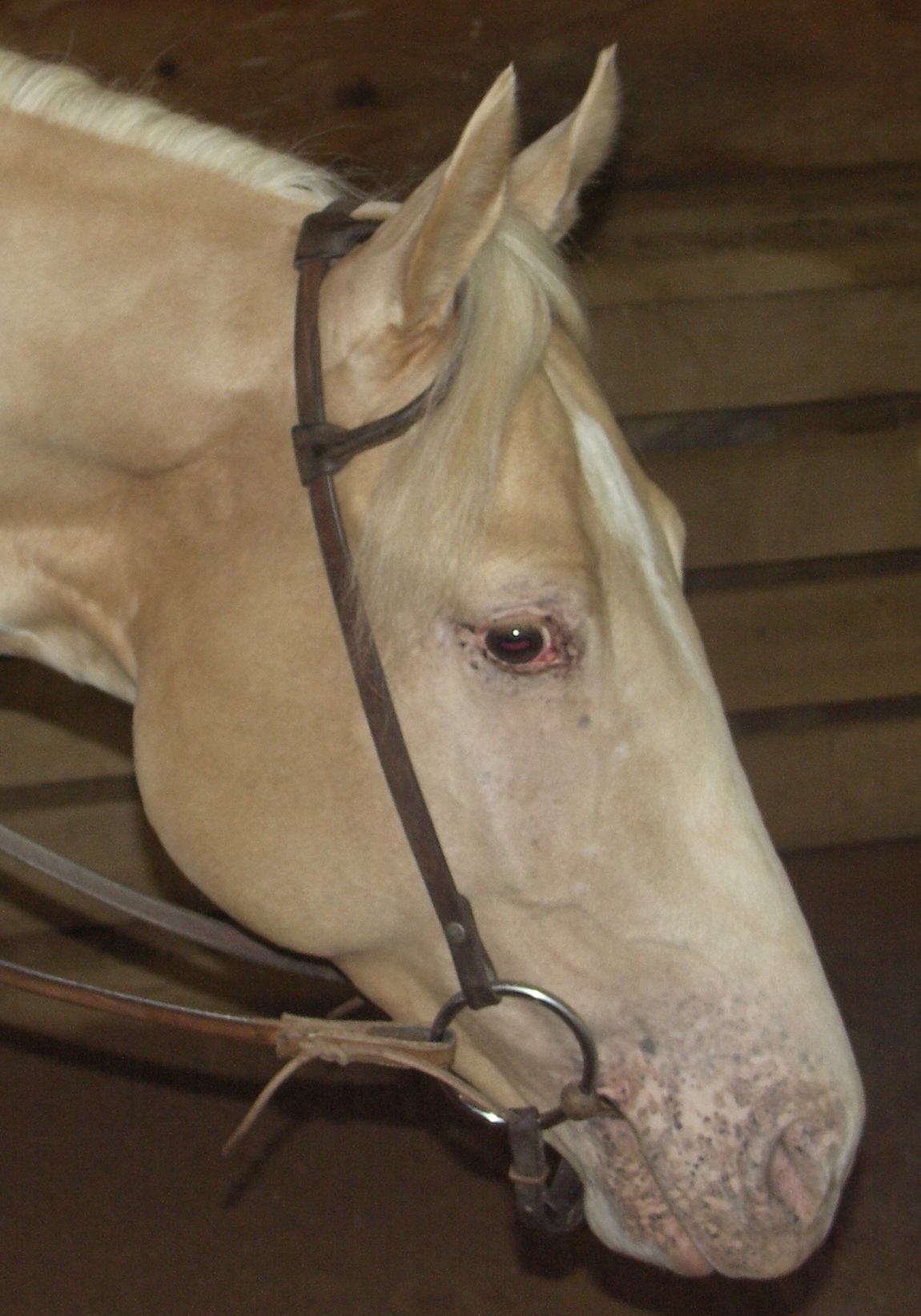
"The adult champagne horse will have
pink
skin with abundant dark freckles."
The skin will be this color everywhere except under pure white markings.
For FOAL champagne
colors click here.
Also, the coat, mane & tail colors will be diluted (not dark black or chestnut.)
Some of
the pictures below are full-sized;
those with beveled edges or blue borders are
clickable to enlarge.
By studying the pictures on
this page, and elsewhere on this web site, you may be able to determine
by a visual examination, alone, whether your horse is a champagne color.
However, it's best to let an expert examine your horse, even if by
photographs alone, and look at its ancestors and any foals it has
produced.
A CHAMPAGNE
HORSE MUST HAVE A CHAMPAGNE PARENT
because it is a dominant gene.
If all of that still leaves a question, there is now a
DNA test for it!
|
CHAMPAGNE SKIN COLOR -
OVERVIEW
|
Champagne
|
EXPLANATION
|
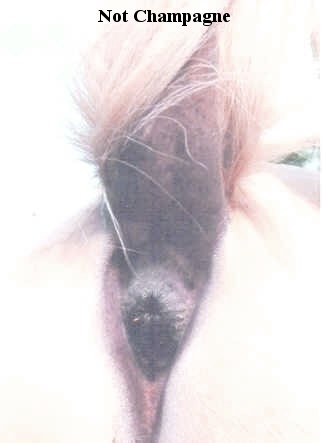
Not CHAMPAGNE
|
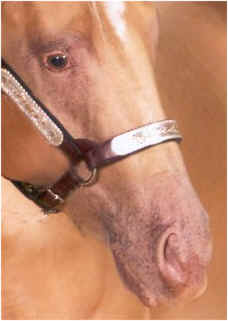
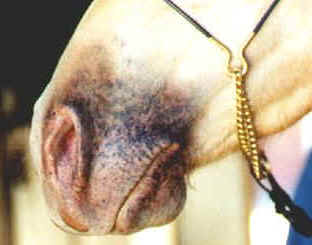
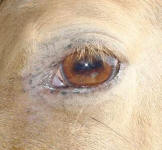
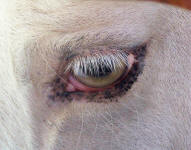
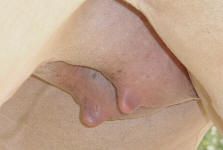
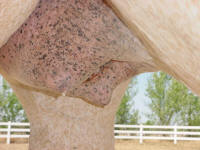
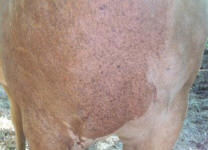
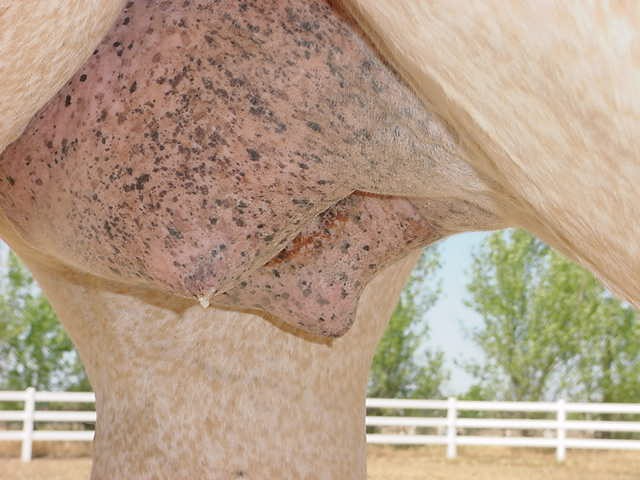
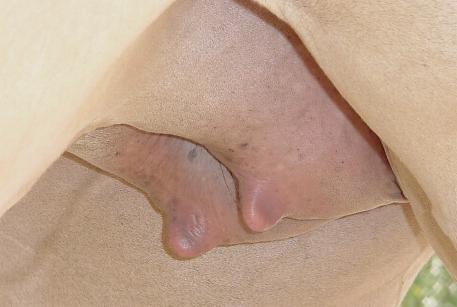
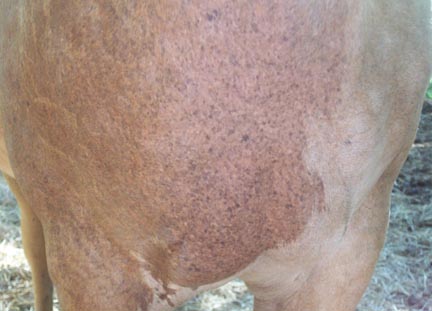
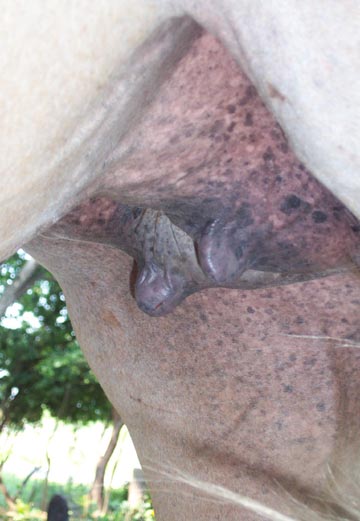
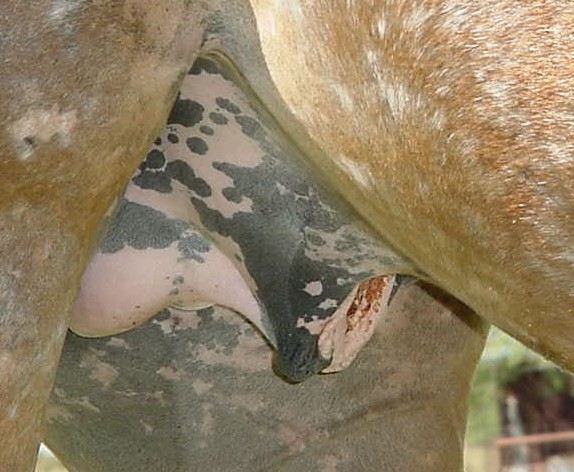
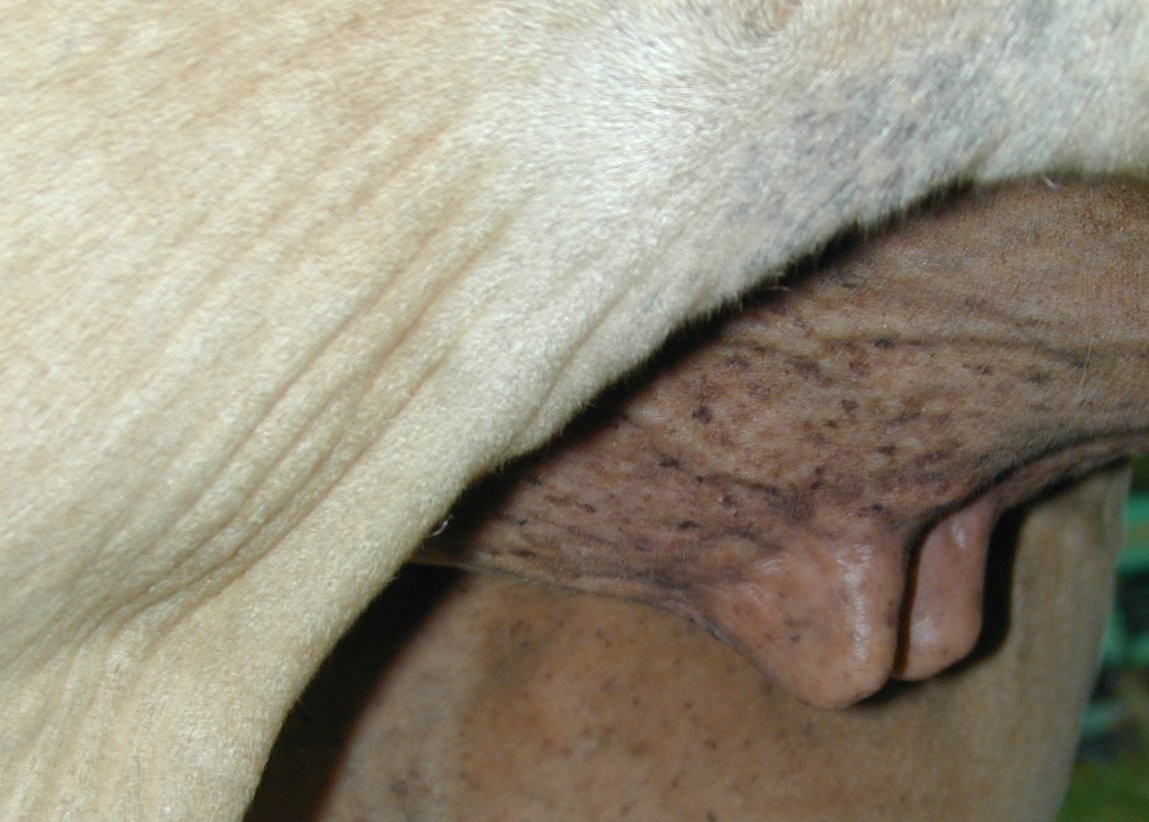
The skin on the udders of champagne
mares is pink everywhere.
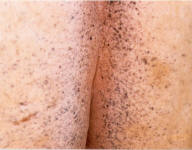
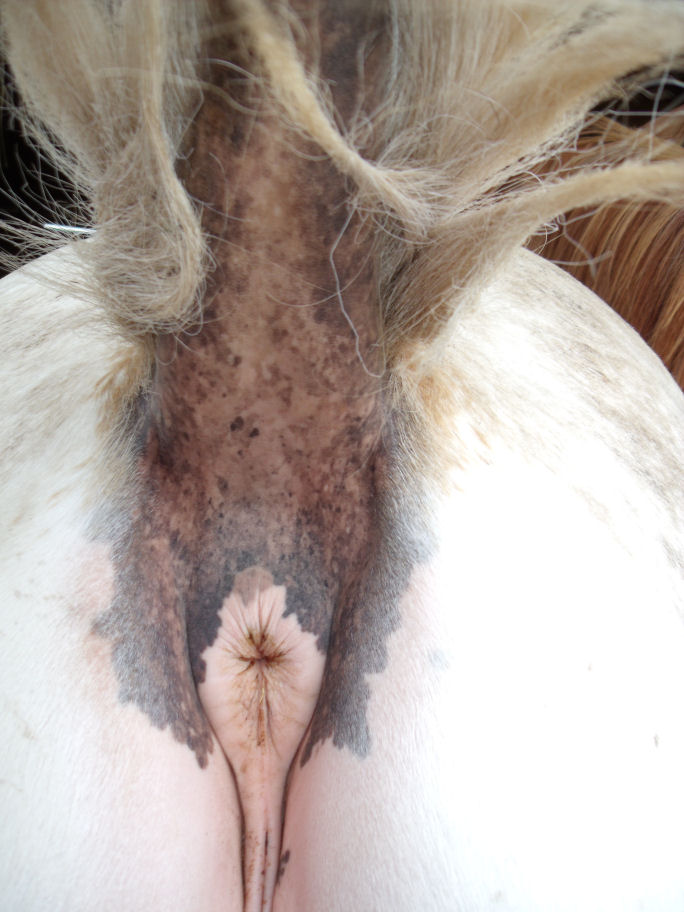
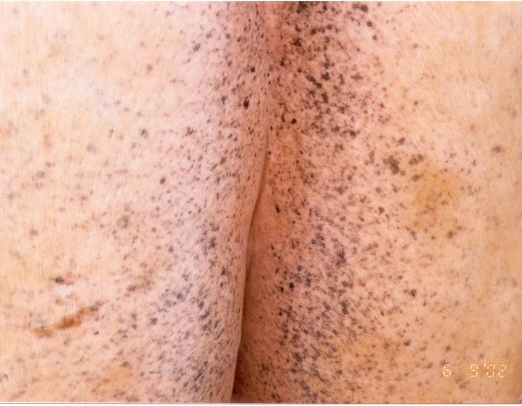
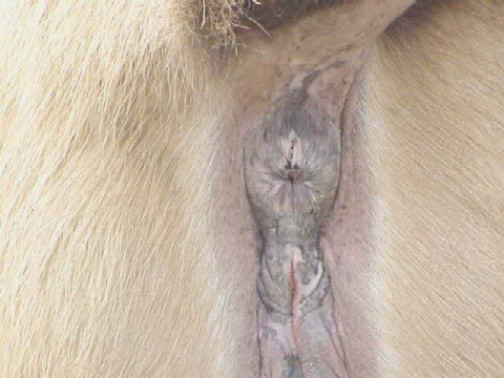
Skin under tail of champagne stallion
(all above are champagne horses)
|
The pink skin of a Champagne horse is "pigmented
pink" -- not the pigment-free, paler pink color found under all white
markings of all horses. Champagne skin may tan.
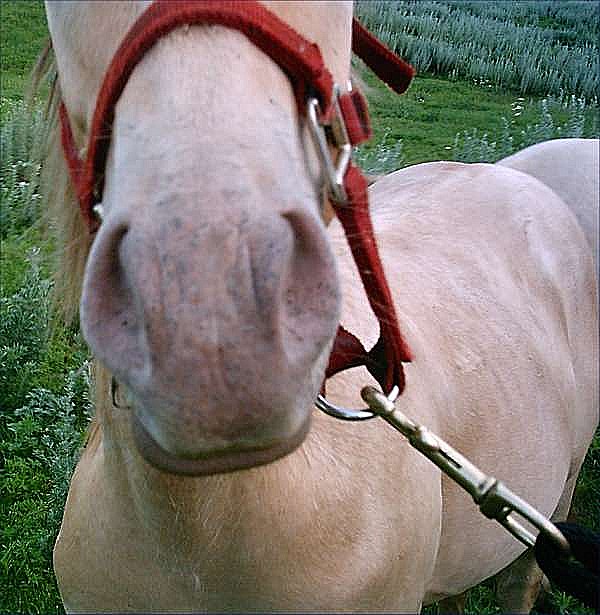
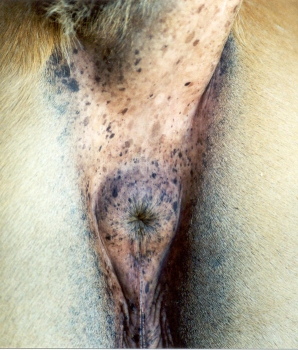
That pink skin has ABUNDANT, DARK freckles,
except in newborns.
(We don't call them mottles, splotches, specks or blotches, to avoid
confusion with other types of equine skin pigmentation.)
Champagne skin is this
color EVERYWHERE that there is colored hair on the horse.
There are
usually fewer freckles under the main body hair.
It's easiest to identify
--
and the most freckles appear -- in these places:
around the eyes,
on the muzzle, &
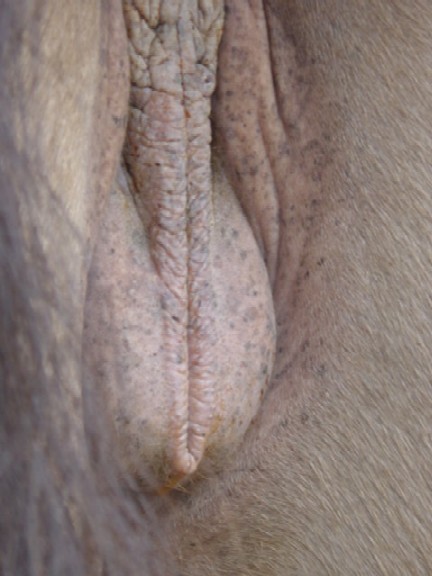
around the
private parts.
Left: various examples of champagne skin; facial and
private parts.
Right,
from top: Palomino skin - around eye & on muzzle, on chest, and under
tail; a perlino dun; Appaloosa skin; cremello skin; palomino
udder and teats.
Note: since the
discovery of the PEARL gene, this skin coloring alone is not sufficient
to prove that a horse is a champagne, since pearl and cream-pearl horses
also have similarly-colored skin. The horse also must have a
champagne parent, since champagne is a dominant gene.
Pearl is not dominant, but
recessive,
which is how
it was discovered.
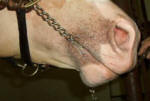
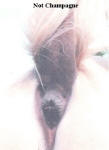
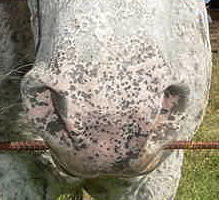
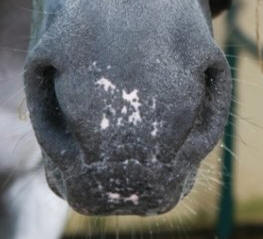
The picture
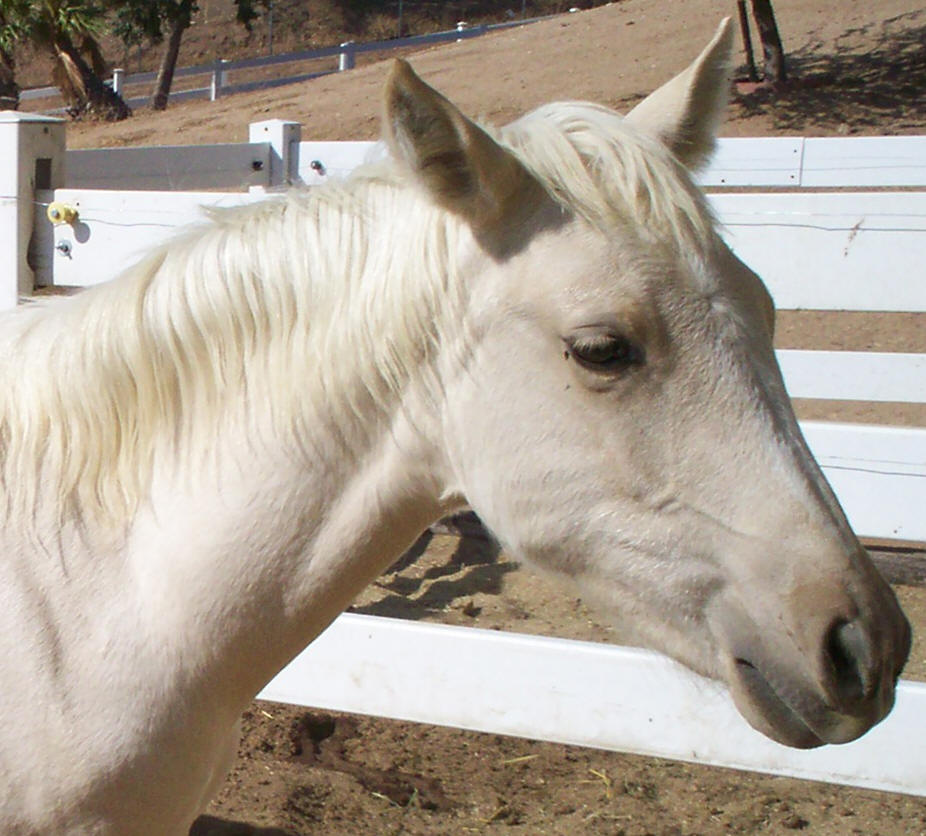
immediately below is of the muzzle of a PEARL dilute. Click to enlarge.
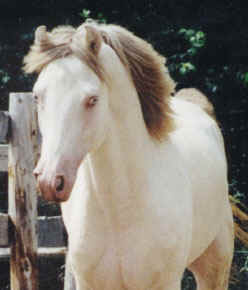
And here is a photo of a
cremello:
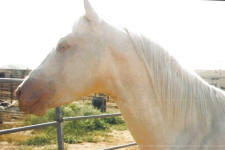
Cremello - click to see "dark specks"
rather than freckles.
|
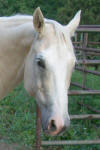
The skin on the muzzle and around the eye of a mature Palomino will usually be dark gray or
black,
except where white markings are present.
Occasionally, Palomino horses with
sabino roaning
may have pink skin in places, as do the two above.
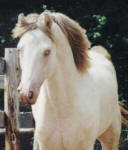
Perlino Dun
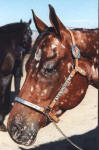
Appaloosa skin
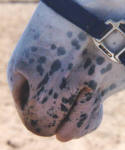
Appaloosa skin
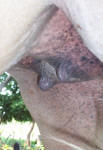
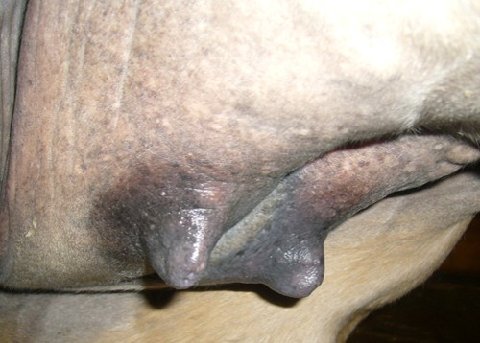
The teats on the udder of a
Palomino mare are dark.
|
CHAMPAGNE COAT COLORS
|
Champagne
|
EXPLANATION
|
COMPARE
|
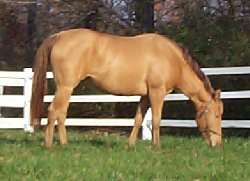
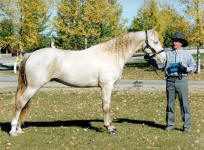
Classic Cream Champagne
|
HAIR/COAT DILUTION
The pigment of the body, leg, mane and tail hair of a
champagne horse will all be diluted. "Dilute" is what milk does to the
color of coffee -- it lightens it. But not every diluted-color horse
is a Champagne (see examples).
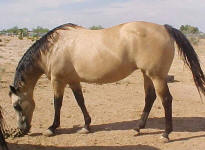
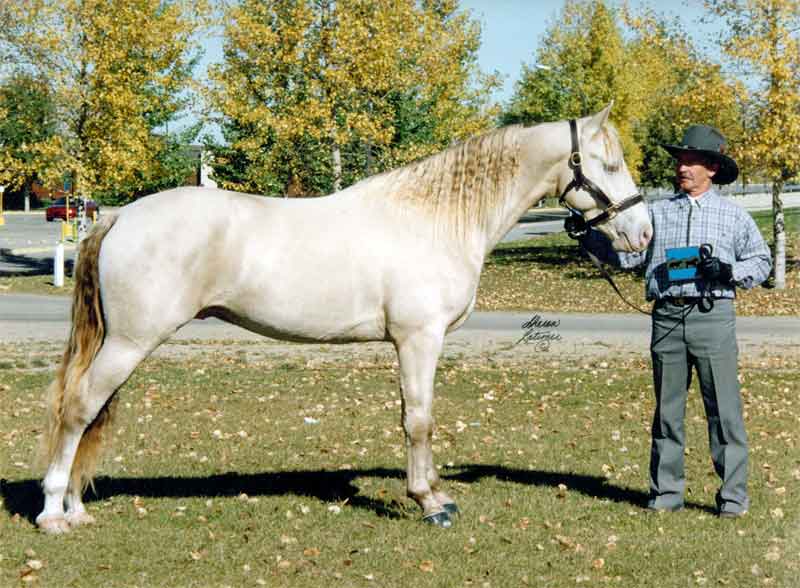
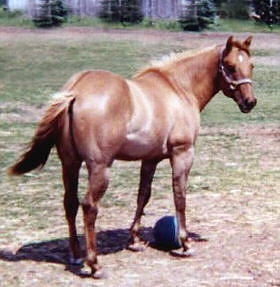
Left, upper: an amber champagne,
the result of
Champagne on a bay base.
Left, lower: classic
cream, the result of champagne plus cream on black.
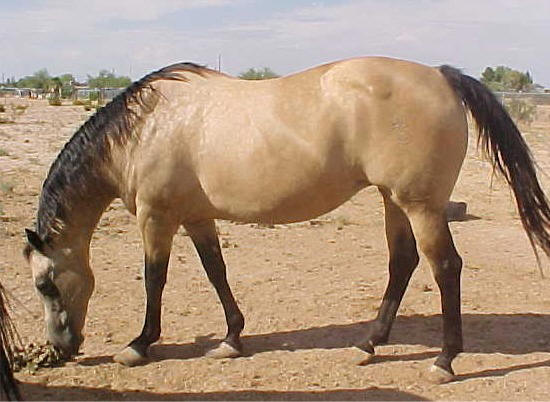
Right, upper: a buckskin, the result
of
CREAM on a bay base.
Her points are true black.
Right, lower:
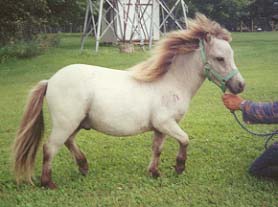
silver buckskin,
bay + cream with a silver (Z) gene added.
|
Silver buckskin
|
Champagne horses
may have
darker coats in winter than in summer, unless they also have a cream gene.
Horses with a cream gene tend to have a lighter coat in winter.
|
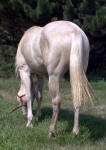
Gray Champagne
Gray Champagne
|
SHINE
Shine is not taken into account, because many
non-champagne horses' coats are extremely shiny or iridescent, and many
champagne horses' coats do not show any unusual shine.
Of course, champagne is not just a
catch-all
name for light colors, either.
Left, top: gold champagne, the result
of the gene acting on a red (chestnut) base.
Upper right:
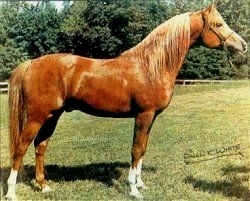
Lewisfield Sun God, a very shiny chestnut
Arabian.
Center
right: a very light-colored, shiny palomino (click to see the shine).
Lower
right: a very shiny dark cremello (click to see the shine).
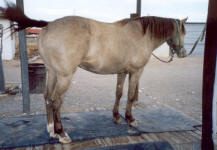
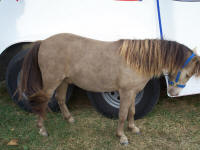
GRAY ON CHAMPAGNE
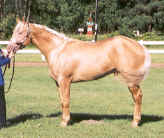
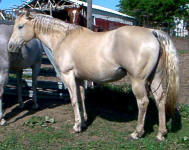
Many champagne gray horses
are more colorful than their non-gray or non-champagne counterparts.
They tend to be born darker, have darker freckles, and can have so many
flea-bites after graying out that, from a distance, they appear to be
colored.
Left,
center and lower: gray on champagne
|
|
|
 |
DAPPLES
Reverse dappling may
be found on
Champagne
colored horses, depending on the time of year, etc. (Reverse dappling
is the appearance of dark spots with lighter, surrounding "lacing".)
However, it also may occasionally be found on dun and other colors.
Left: three champagne horses with
reverse dappling. Click to see the
dapples clearly.
Right,
upper: dun with reverse dappling.
Right,
lower: normal dapples on a bay.
Center column, below: click
to see
normal dapples
on a cream champagne,
caused by the cream gene.
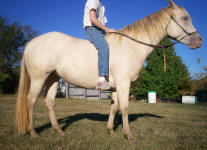 |
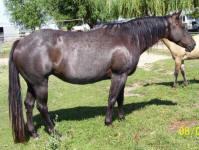
"Frosty" roan mare with reverse dapples
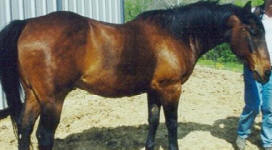
Normal dapples on a sooty bay, for comparison. Normal dapples are
light spots, with a surrounding dark "lacing" or "net" effect.
We would appreciate a picture of reverse dapples caused by dun.
Please let the webmaster know it's for the ICHR "Identification" page.
|
|
|
MYSTERY COLORS
Every mysterious color is not
automatically champagne. When coat colors are mysterious, one must look further to
determine the genetics of the horse.
Compare these
two horses:
Left: an amber champagne mare
Right:
formerly a "mystery color",
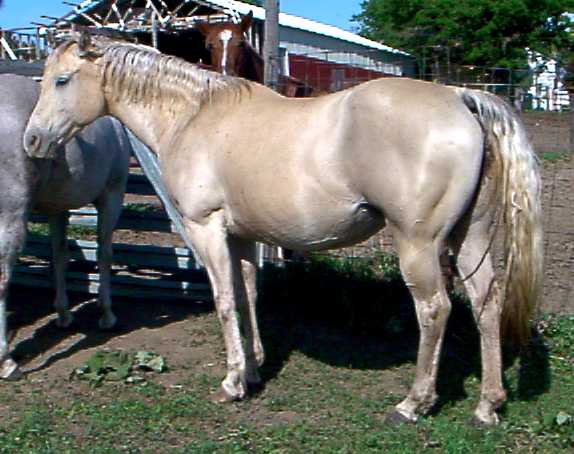
this Palomino
turned
this color
in his later years.
He has dark skin,
and
DNA tests
prove he is a palomino!
|
|
|
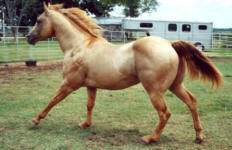
Left: this was once a "mystery color". But it is
now known that here are some Gold
champagnes with this unusual
"Dark
Gold" coloration.
Right: red duns may look
a little
similar,
but duns have dark skin, and stripes.
|
|
SKIN
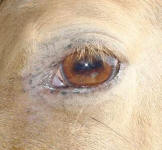
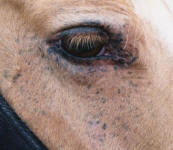
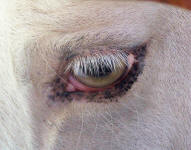
AROUND eyes - DETAILED
|
CHAMPAGNE
|
EXPLANATION
|
COMPARE
|
|
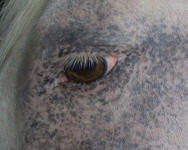
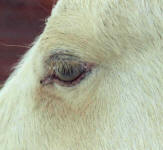
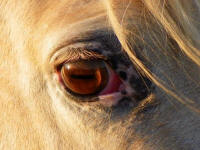
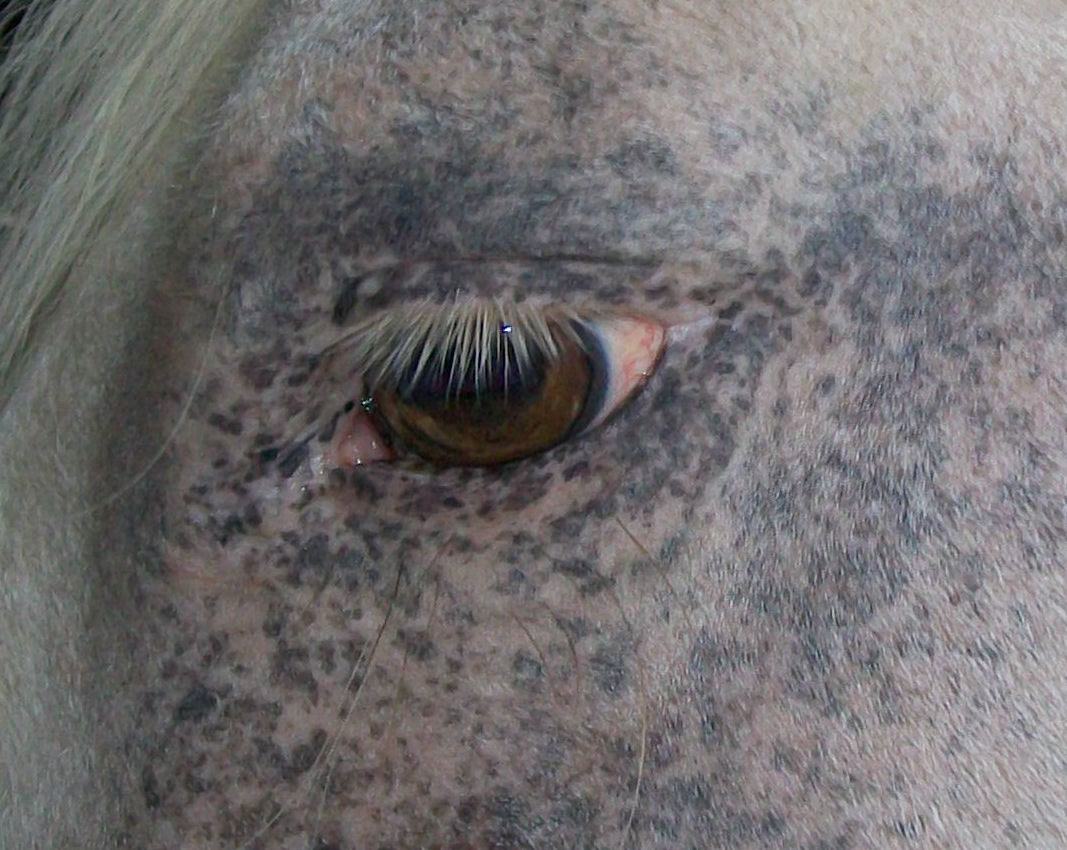
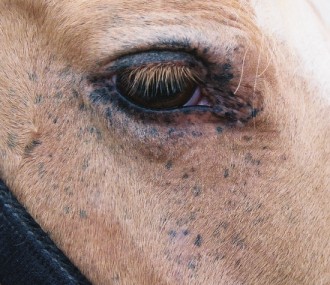
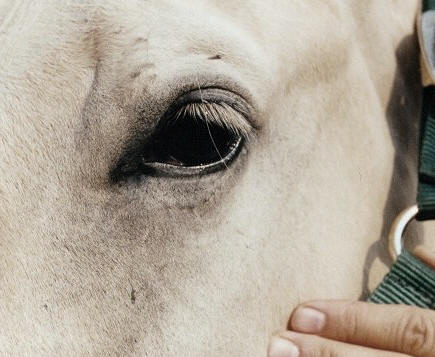
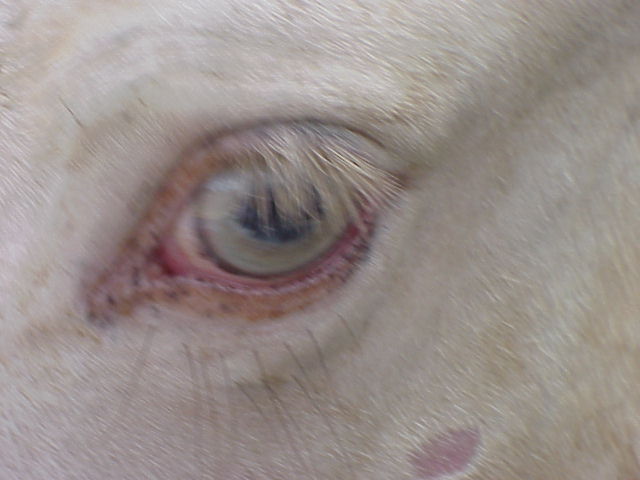
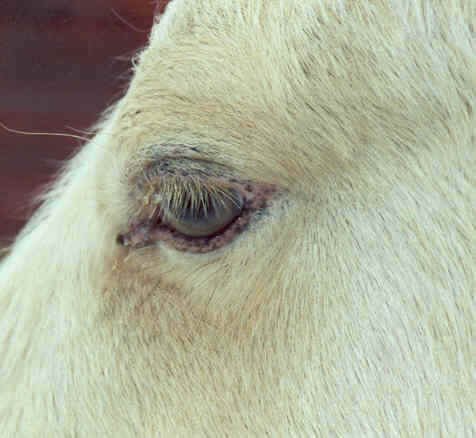
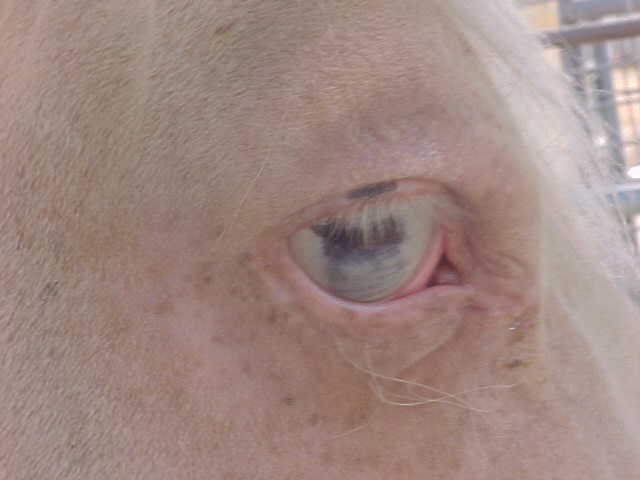
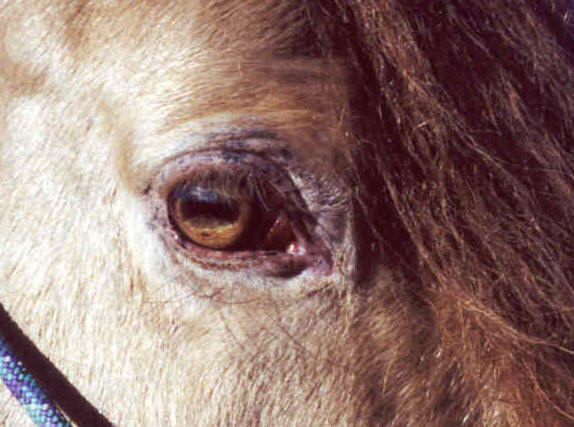
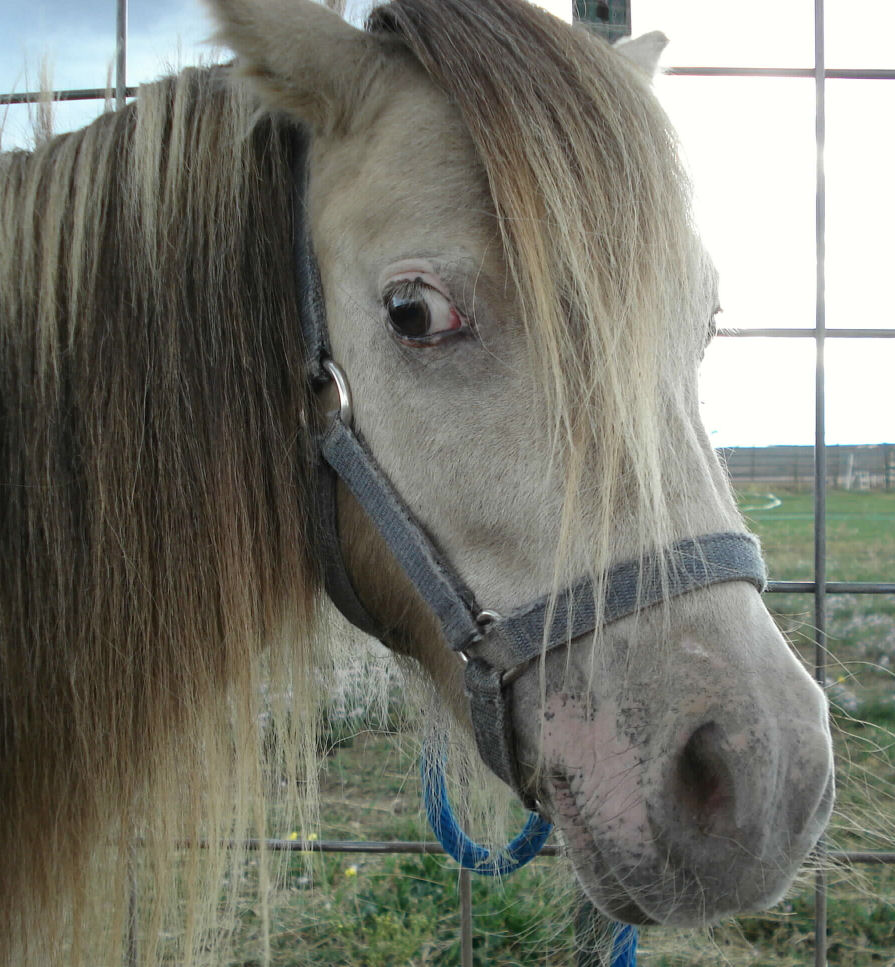
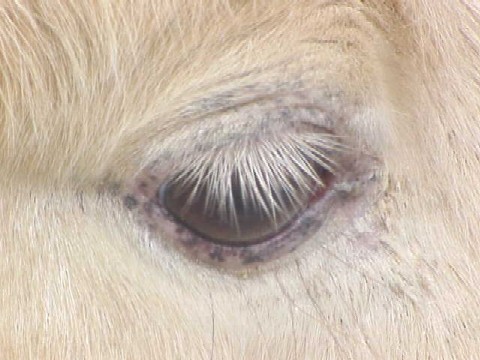
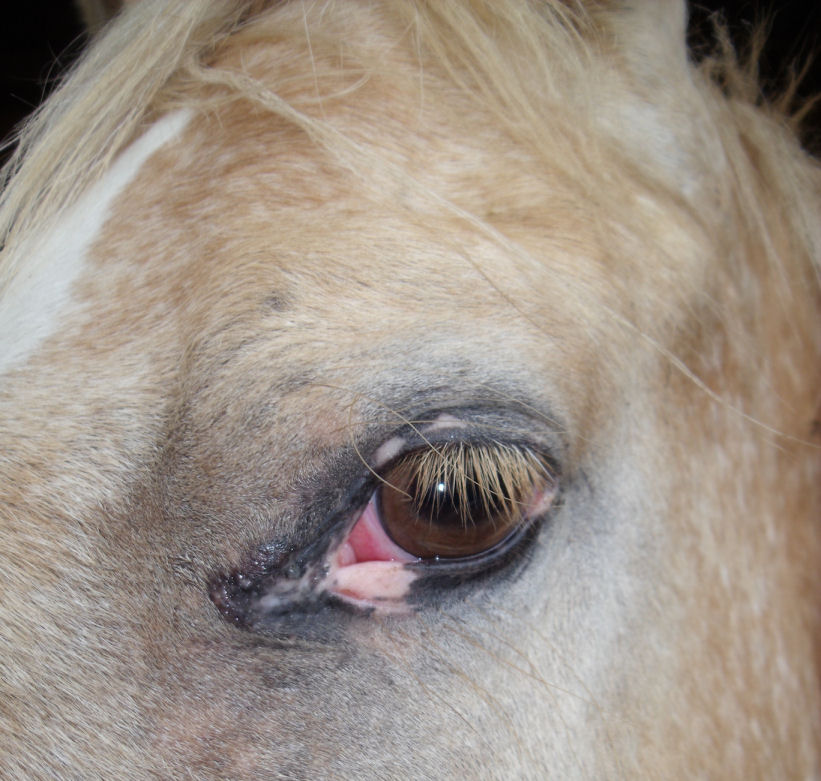
The visible skin touching, and all around, the eye of a champagne horse will be
pigmented-pink
with abundant dark freckles. Though a few other genetic combinations
can produce pink, freckled skin, they're usually different in quality or
quantity (see examples at right.)
Sometimes the skin around the eye of a
champagne colored horse can be almost all dark, due to the abundance of
freckles.
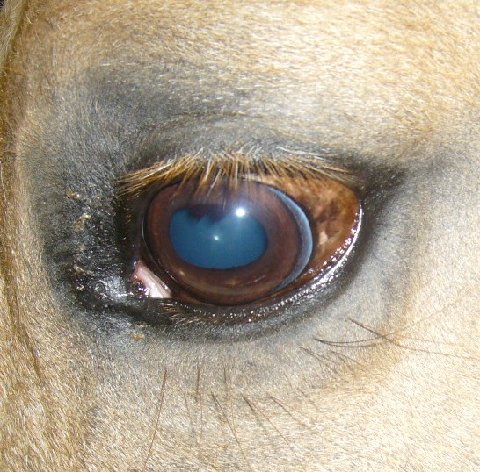
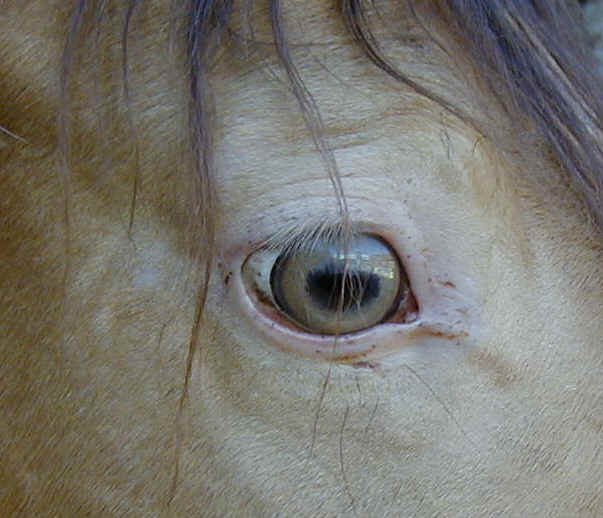
MOST horses have very dark (black or charcoal
gray) skin around their eyes, except for under white pinto/paint/Appaloosa
markings, and double-cream and pearl dilutes.
Left: various champagne eyes
Right,
upper: dark eye skin
typical of most non-champagnes
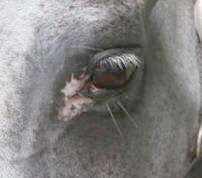
Right,
lower: pink areas due to the depigmentation found in some gray horses as
they age.
|
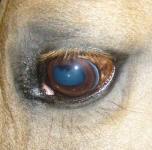
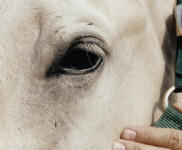
palomino (fine light hairs around eye, not light skin)
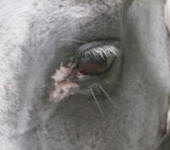
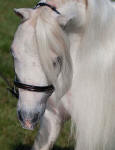
gray depigmentation/vitiligo
|
|
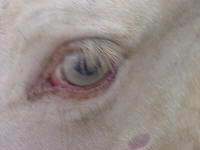
 |
DOUBLE-CREAM
"dark specks":
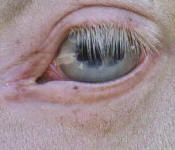
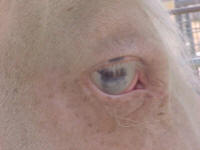
The skin around the eyes of a double cream dilute, like cremello or
perlino, will be a slightly different shade of pink, and have just a few
black "specks" rather then typical champagne "freckling". Compare
these pictures to become familiar with the difference.
Left: champagne plus cream
Right:
double cream dilutes.
|
both cremellos
|
|
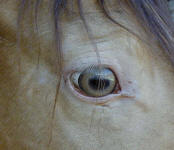 |
OTHER PINK FOAL SKIN
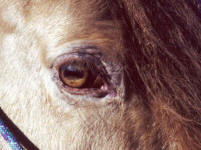
Often, horses with one cream gene will be born with pink skin.
It usually darkens to black within weeks.
Left: Champagne eyes, older and younger
Right: a smoky black
mare's
eye with pinkish
skin and
some "speckles".
|
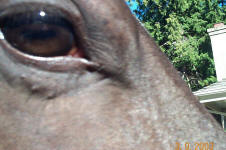
|
|
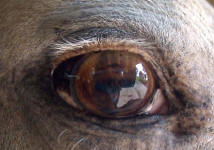 |
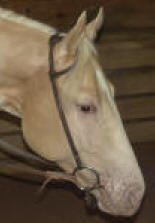
GRAY CHAMPAGNE SKIN
Gray on a champagne horse often produces darker colors in both
coat and skin. Gray on a non-champagne is sometimes accompanied by
depigmentation, or loss of pigment/color in skin on the face, not to be
confused with the darker-pink champagne skin with freckles.
Left: gray on champagne
Right:
non-champagne
gray depigmentation
|
gray depigmentation/vitiligo
|
|
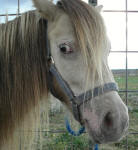
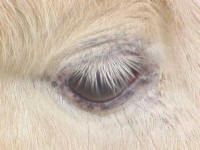
|
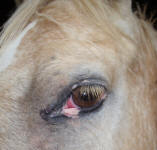
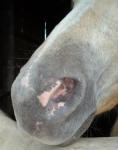
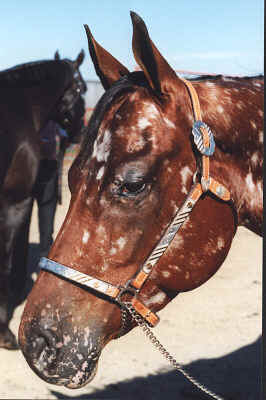
CHAMPAGNE APPALOOSA SKIN
Appaloosa skin has various degrees of
depigmentation. The pigmented part of a champagne + Appaloosa
horse's skin will be pink with freckles, in addition to the
non-pigmented pink areas common to Appaloosas.
Left and below: Appaloosa PLUS champagne.
The two pictures of the mare, below, show that nothing in horse color is
"etched in granite"... she really is champagne!
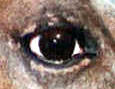
Another Champagne & Appaloosa eye, below,
courtesy of Julie Yatsko.
|


Sorry, no larger versions of these are available
Non-champagne
Appaloosa eye skin
|
|
PEARL IS NOT CHAMPAGNE
Pearl is a newly-identified dilution gene, believed to be an allele of
cream,
which, in its homozygous form or combined with cream,
produces
dilute colors with pink skin and often more-muted freckles.
But, as you can see from these photos of
two different horses with pearl dilutions,
either a DNA test or
parentage/offspring study may be needed to differentiate pearl and
pearl-cream from champagne.
|
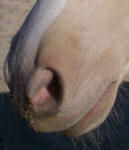
A young Palomino + Pearl
|
Pearl; the very light skin is just under white markings (an
extended blaze) |
|
MUZZLE SKIN
|
CHAMPAGNE
|
EXPLANATION
|
COMPARE
|
 |
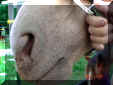
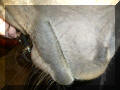
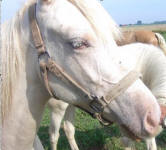
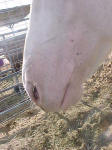
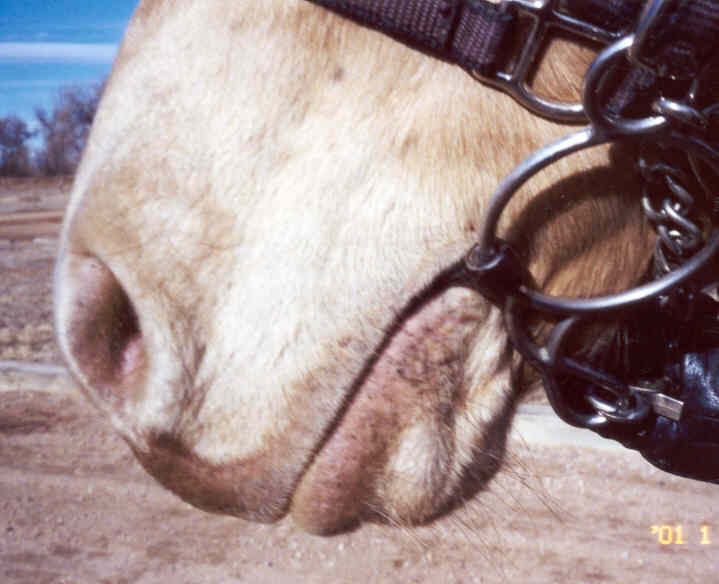
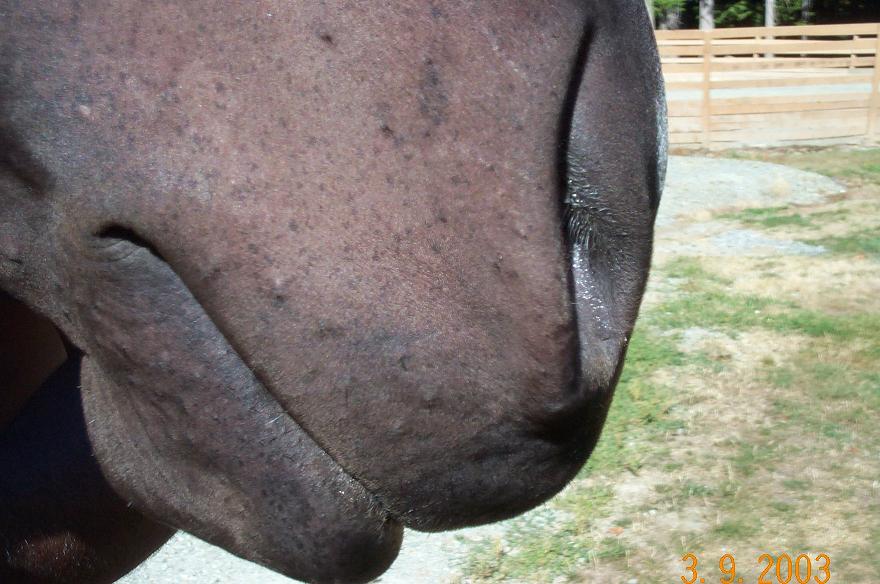
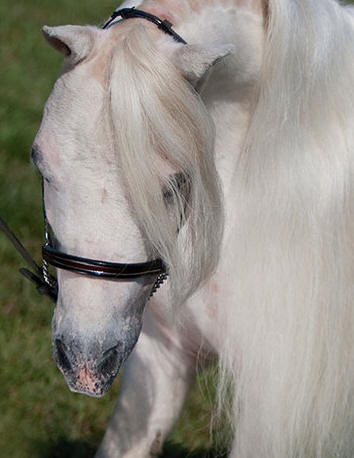
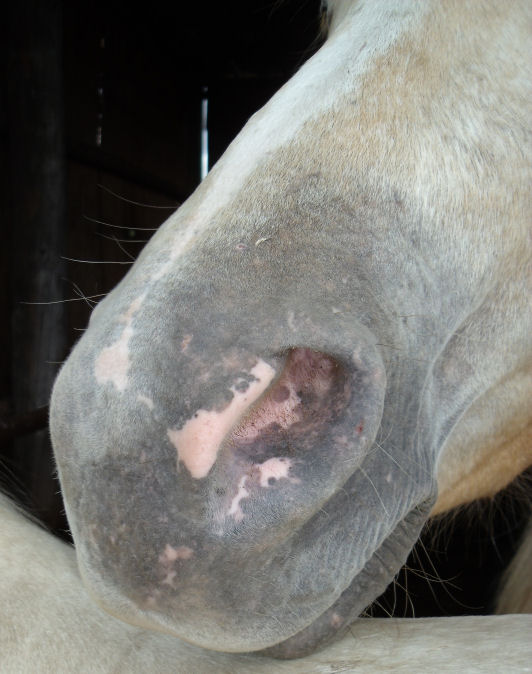
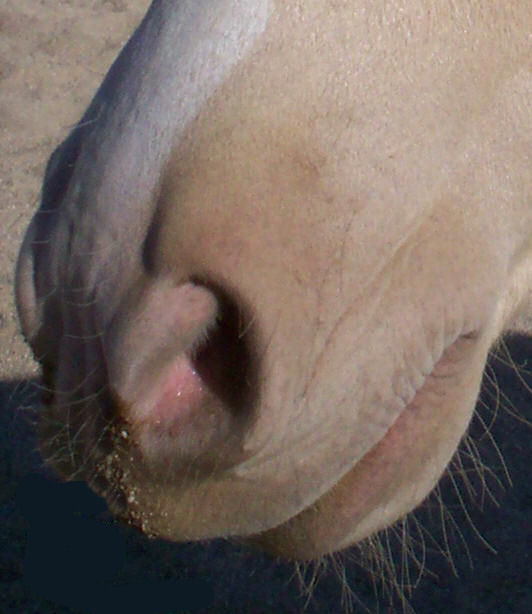
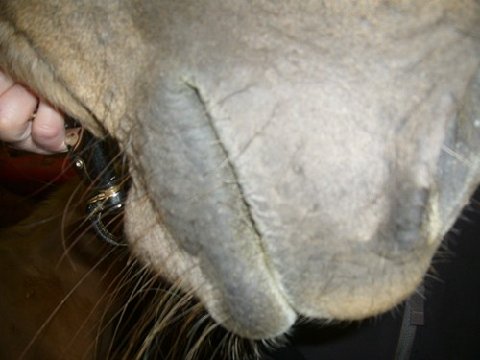
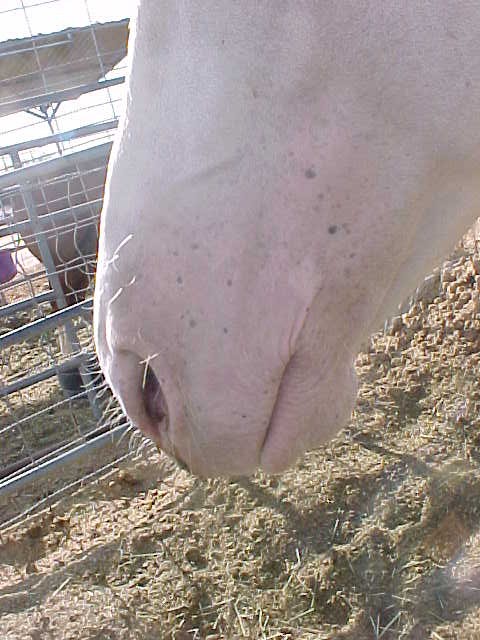
As described above, champagne skin is pink with abundant,
dark freckles.
Left: typical champagne muzzle skin
Right,
above: "pink-skinned Palomino" muzzle
Right,
below: normal palomino muzzle
|
|
 |
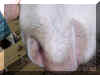
Left: Amber champagne
Right: buckskin
|
|
 |
The pink skin of a "double cream" (cremello, perlino,
etc.) is a slightly different shade than champagne skin, and it has sparse
black "flecks".
Left, top: gold cream muzzle at 4½
months. Look closely under the hair for the freckles.
Left, below: older gold cream filly
Right: adult cremello muzzle
|
|

|
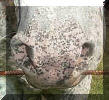
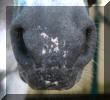
Left: Amber champagne
Right: Appaloosa,
gray
depigmentation/vitiligo
|
Appaloosa
Gray
Thanks to Supanee Chaiwiroj of Thailand
for the pictures of gray pigment
loss.
|
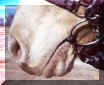 |
Freckled skin is much harder to
see through heavier winter coats.
Left: classic champagne
muzzle in WINTER.
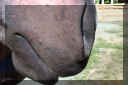
Right: muzzle of a smoky
black
(one cream on black)
|
 |
|
Here is an example of why it's so important to use pedigree as well as
appearance (and DNA testing where possible) to determine a horse's true genetic color identity.
Left: champagne muzzle
|
|
PRIVATE PARTS SKIN
|
CHAMPAGNE
|
EXPLANATION
|
COMPARE
|


 |
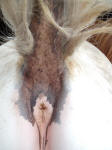
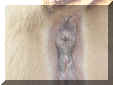
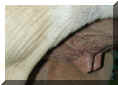
Left: under-tail shots of typical champagne skin, mares
Right
above: under-tail shot
of typical
double-cream skin, mare
Right
middle: under-tail of
palomino mare
Right,
below: under-tail of
palomino gelding
|

cremello

palomino

palomino
|
|
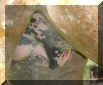
As on the face, skin of a champagne that is also appaloosa will be a
pigmented pink color with abundant freckles, with typical Appaloosa
un-pigmented areas, also.
Left: under tails of
champagne Appaloosas
Right: private parts of
Appaloosa
|

|
|
 |
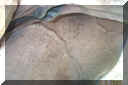
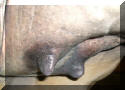
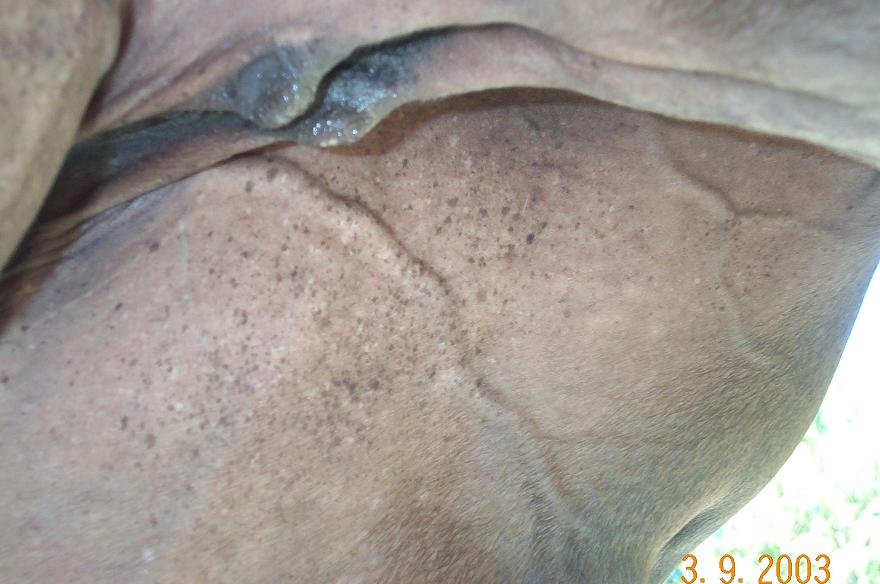
When it comes to UDDERS, some cream dilutes have pink, freckled, skin
there, but the teat color is dark on a single cream
dilute (palomino, etc.),
and light on a champagne.
Left: the skin on the udders of two champagne mares
Right
top: skin on the udder of
a smoky black mare
(one cream gene on black)
Right
middle: palomino mare
Right
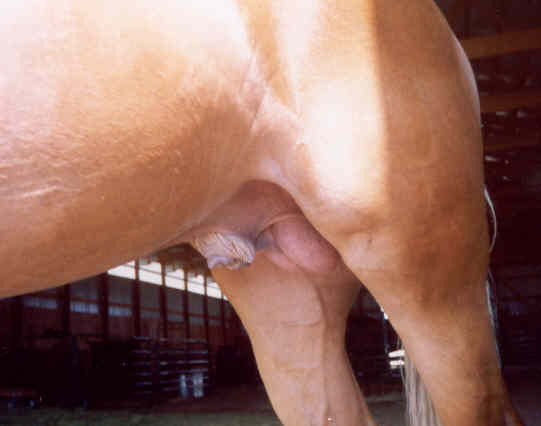
bottom: private parts
of a
palomino stallion
|
 |
|
|
|
|
DNA COLOR TESTING
|
Horses can now be tested for most color genes to find out
their
true genetic color identities. This is very useful for those who
wish to breed for certain colors (or to avoid certain colors.) Several labs currently offer
tests for black (black or bay) or red (chestnut) pigment, agouti (bay,
brown or
solid black), silver, pearl, and cream, in addition to the three paint gene tests available
(tobiano, sabino-1 and frame/LWO). And
a champagne
test is now available!
|
AN EVEN RARER, NON-CHAMPAGNE DILUTION:
PEARL
|
PEARL colors were addressed briefly, above. During the course of examining horses to be registered with the ICHR,
some horses were discovered whose colors could not be explained by any then-known
genetic color combination. They looked somewhat like champagne
colors, but several important characteristics were wrong.
When these unexplained colors were thoroughly researched, they turned out to have distinct genetic signatures,
different from any currently catalogued!
There is now a test for the PEARL gene.
The founders and friends of the ICHR
continue to research unusual and undocumented colors in horses. You
may join the ICHR list as a launching point to learn more
(see the Yahoogroups button, below.)
THE ICHR DID NOT NAME THE PEARL GENE;
a group of owners of horses with this
new dilution agreed upon
it; and later, U.C. Davis also agreed to use the name.
If you still find it impossible to tell what is a champagne
color, and what is
not, after studying this page,
just
remember: it takes years of study and experience, including some
scientific training (usually),
to become a horse color "expert".
Don't
give up; join the Yahoogroups ICHR discussion list (see button,
below) ;
learn from the experts!
|
* If the horse has also been proven to have two cream genes, or cream + dun on chestnut,
plus champagne, it may not
have many visible freckles. Any it does have may be rather pale.
Also, homozygous champagnes tend to have fewer freckles.
|
|






















 Emailing
ICHR
Emailing
ICHR